
Roots & Memory
WWII in Italy: The Places American Families Come Back To
Where American families go in Italy to follow a relative's war: the Sicily beaches, Salerno, Cassino, Anzio, and the American cemeteries at Nettuno and Florence.
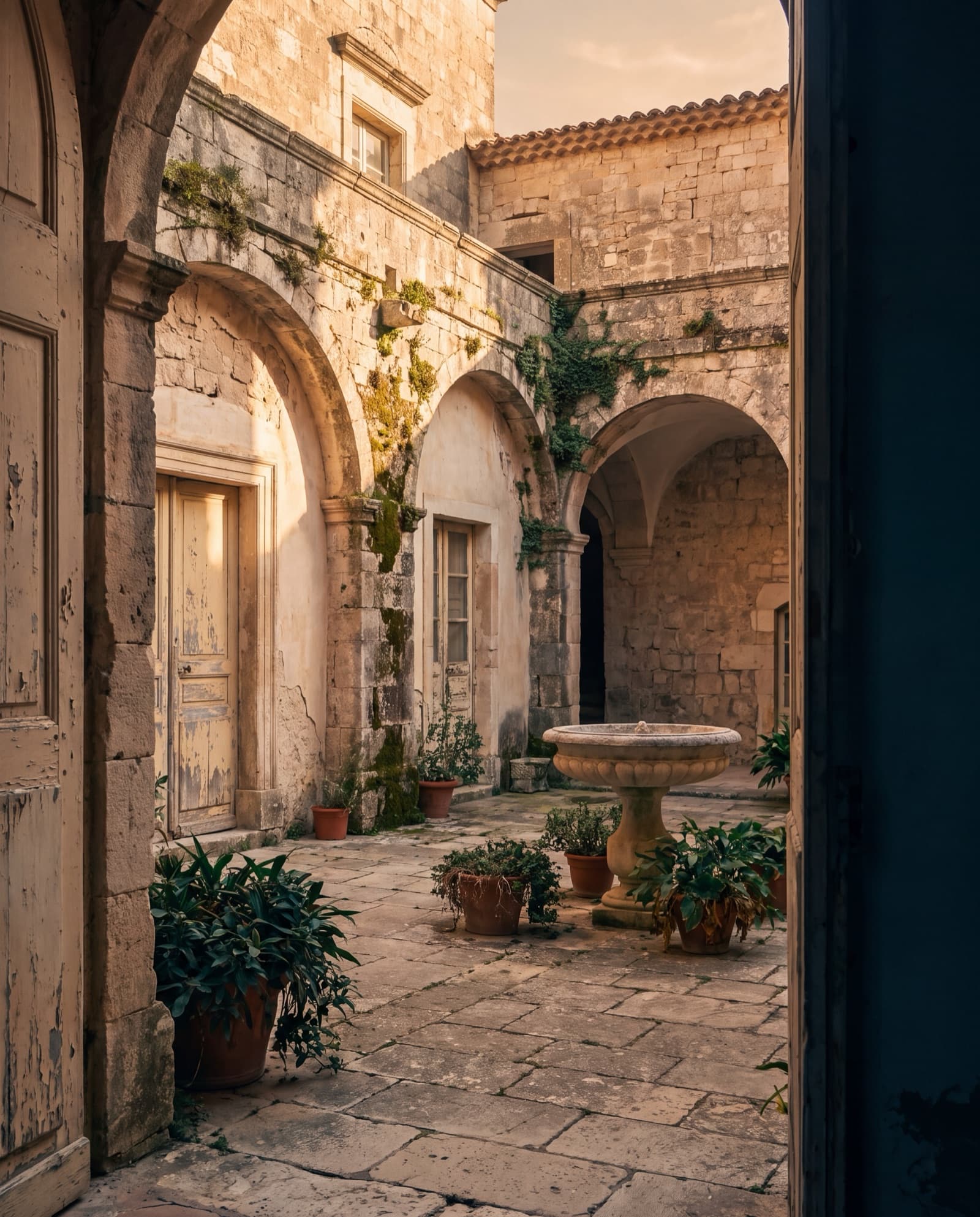
The WWII sites in Italy that American families return to lie along the route of the Italian campaign: the beaches where the invasion of Sicily began on July 10, 1943, the Gulf of Salerno, the Cassino front, the Anzio beachhead, and the two American military cemeteries, at Nettuno and south of Florence. The campaign ran from Sicily in the summer of 1943 to the German surrender in northern Italy on May 2, 1945. Before you choose where to go, find out where your relative served, and whether he or she is buried or named in Italy.
Start with one name
The American Battle Monuments Commission, the U.S. government agency that maintains America's military cemeteries overseas, keeps an online database of the service members buried or memorialized at its sites, more than 200,000 of them. If the name is there, the entry gives you the cemetery and the grave.
Whether or not your relative came home, the service file is held by the National Archives, at the National Personnel Records Center in St. Louis, and veterans and next of kin can order copies online. Expect gaps. On July 12, 1973, a fire at the Center destroyed about 80 percent of the files of Army personnel discharged between November 1, 1912, and January 1, 1960. The Center rebuilds basic service information from other records, such as Veterans Administration claims files, pay records and Army morning reports. Once you know the division, the short campaign histories of the U.S. Army Center of Military History show where it fought.
If your family also came from Italy, the search for the ancestral town is a separate one. Our guide on how to find your family's town in Italy explains where to start.
The invasion of Sicily: Operation Husky, July 1943
Roosevelt and Churchill chose Sicily as their next target at the Casablanca Conference in January 1943. On the night of July 9 to 10, an Allied armada of 2,590 vessels launched Operation Husky, and over the next 38 days half a million Allied soldiers, sailors and airmen fought for the island. The US Seventh Army, under Lieutenant General George S. Patton Jr., landed three divisions on the Gulf of Gela: the 45th near Scoglitti, the 1st at Gela with two battalions of Rangers, and the 3rd at Licata. Paratroopers of the 82nd Airborne Division dropped inland, and the British Eighth Army under General Sir Bernard Montgomery landed on the southeast coast, between the Pachino peninsula and Syracuse. On the morning of August 17, men of the 3rd Division's 7th Infantry Regiment entered Messina, hours after the last Axis troops had left for the mainland. According to the US Army Center of Military History's campaign brochure on Sicily, 2,237 Americans were killed and 6,544 wounded or captured.
On the island today, the Museo Storico dello Sbarco in Sicilia 1943, the museum of the 1943 landing, fills about 3,000 square meters of Le Ciminiere, a restored 19th-century sulfur works in Catania near the central station. It opened in December 2002 and follows the landing of July 10 and the advance across the island. Near Motta Sant'Anastasia, at the foot of Etna, the German war cemetery holds 4,561 German dead. There is no American military cemetery on the island. Many of the Americans who died in Sicily are buried at Nettuno, near Anzio.
Salerno and the road to Cassino
Italy's surrender was announced on September 8, 1943. The next morning the US Fifth Army, under Lieutenant General Mark Clark, landed on the Gulf of Salerno, with the 36th Infantry Division, a Texas National Guard unit, in the first wave. On October 1 the 82nd Airborne Division, with Rangers, entered Naples. North of the city the Germans held a series of fortified lines, and the strongest of them, the Gustav Line, was anchored on Monte Cassino. The fighting there lasted from January to May 1944. Our guide to visiting Monte Cassino covers the abbey, the Rapido crossing of the 36th Division and the war cemeteries around the town.
The Anzio landing
On January 22, 1944, in Operation Shingle, the Allied VI Corps came ashore on a 15-mile stretch of beach near Anzio and Nettuno, south of Rome. The first wave included the US 3rd Infantry Division, the British 1st Infantry Division, three battalions of US Army Rangers, American paratroopers and British Commandos, and by midnight more than 36,000 men were ashore. The plan was to cut the German supply routes behind the Gustav Line and open the road to Rome. The Germans contained the beachhead, and for four months the Allied troops held a strip of flat ground under air and artillery attack, including fire from a 280-mm railway gun the soldiers called Anzio Annie. On May 25 troops from the beachhead met Fifth Army units coming up from the south, and on June 4, 1944, Americans entered Rome.
In Anzio, the Anzio Landing Museum at Villa Adele, five minutes from the train station, shows uniforms, weapons and photographs of the American, British, German and Italian soldiers who fought here, and as of September 2026 admission is free. The Commonwealth War Graves Commission cares for two cemeteries nearby: Anzio War Cemetery, begun soon after the landing, and Beach Head War Cemetery, where more than 2,300 Commonwealth servicemen are buried.
How many U.S. soldiers died at Anzio?
The US Army's official campaign history counts about 2,800 Americans killed in the four months at Anzio, among 16,200 American combat casualties that also include 11,000 wounded and 2,400 captured or missing. The same history puts Allied combat casualties at Anzio at more than 29,200, 4,400 of them killed. The Naval History and Heritage Command gives a lower total, more than 23,000 British and American combat casualties with about 4,400 killed, and records at least 160 US Navy personnel killed in action at Anzio.
What did Churchill say about Anzio?
Churchill had pressed for the landing. For him a quick capture of Rome was the key to the Mediterranean strategy, and in early January 1944 he persuaded the Americans to keep enough landing ships in the Mediterranean to make it possible. When the beachhead stalled, the corps commander, Major General John Lucas, was relieved on February 22 and replaced by Major General Lucian Truscott. Churchill later complained that he had hoped to throw a wildcat onto the shore and had got "a stranded whale."
The Sicily-Rome American Cemetery at Nettuno
The Sicily-Rome American Cemetery lies at the north edge of Nettuno, next to Anzio and 38 miles south of Rome. Its 77 acres hold 7,845 American war dead, in arcs of headstones under rows of Roman pines. Most of them died in the liberation of Sicily, in the Salerno landings and the fighting northward, at Anzio, or in air and naval support. Among those buried here is Second Lieutenant Ellen Ainsworth, an Army nurse of the 56th Evacuation Hospital. When a shell landed a few feet from her ward at Anzio on February 10, 1944, she had her 42 surgical patients placed on the ground to lessen the danger of further injury; she died of her wounds six days later and was awarded the Silver Star. The chapel walls carry the names of 3,095 missing; a bronze rosette beside a name means that service member has since been recovered and identified.
As of September 2026, the cemetery is open every day from 9 a.m. to 5 p.m., except December 25 and January 1, and admission is free. A staff member in the visitor building can take relatives to the grave. When relatives come to lay flowers, staff sometimes rub sand into the lettering of the headstone; it is done only with staff present and does not damage the marble. If you cannot travel, the Commission's flower program places flowers at a grave and can send a photo of them in place. Direct trains from Rome Termini reach Nettuno in a little over an hour, and the cemetery is a 10-minute walk from the station. The cemetery has hosted ceremonies for the anniversary of the landing on January 22, and the Commission holds Memorial Day ceremonies that the public can attend.
The Florence American Cemetery
On the Via Cassia, about 7.5 miles south of Florence, the Florence American Cemetery holds 4,392 American dead on 70 acres. They are 39 percent of the Fifth Army burials first made between Rome and the Alps, and most of them died after the capture of Rome in June 1944, many in the heavy fighting in the Apennines shortly before the end of the war. The Tablets of the Missing carry 1,409 names. As of September 2026, hours and free admission are the same as at Nettuno, and from central Florence you can get there by bus with one change.
What are some good World War 2 tours in Italy?
The useful ones are built around one person: the unit, the dates, and where he or she is buried or named. With those in hand, the route follows the campaign: Sicily for July and August 1943, Salerno for September, Cassino and Anzio for the first five months of 1944, Rome for June 4, then Florence and the Apennines. Nettuno and Florence each take a morning, Cassino a full day, and the Sicilian beaches with the Catania museum at least two days.
A good route also stops where the other armies buried their dead. Near Cassino, the Polish, Commonwealth and German war cemeteries are a short drive apart, and the Italian soldiers who fought beside the Allies lie in the military shrine of Mignano Monte Lungo.
Where is the best WWII museum?
For Americans, the reference is The National WWII Museum in New Orleans, which Congress designated as the official WWII museum of the United States. In Italy the museums are smaller and stand where the fighting happened: the landing museum in Catania, the Anzio Landing Museum and the Historiale in Cassino, which opened in 2004 to honor the dead of all nations.
Our History & Memory experience brings these stories into a trip: the war told at the table, an abbey rebuilt stone by stone, rows of white crosses. If you are coming for one name, send us the unit and the places you know through design your trip. Maria Grazia Nardoianni, who founded Italy Authentica, reads every request, and within seven days you receive a proposal with the real names of places, tables and costs. For the day in the town your family left, read our guide to visiting your ancestral town in Italy.
Related articles
Roots & Memory
How to Find Your Family's Town in Italy
Roots & Memory
Visiting Your Ancestral Town in Italy: What to Expect

Ciociaria & Lazio
Monte Cassino: How to Visit the Abbey and the Battlefield
Sicily
An Eastern Sicily Itinerary: 7 to 10 Days, Slowly

Planning
How to Plan a Trip to Italy: The Questions We Ask First
Food & Wine