
Roots & Memory · · 5 min read
Italian Immigration to America: The Years, the Ports, the Papers
Most Italian American families arrived inside one forty-year window, from a few provinces, through three ports. Knowing which window helps you find the town.
More than four million Italians came to the United States between 1880 and 1924. Almost all of them left from three ports, most came from the provinces south of Rome, and a large share went home again. If you are looking for the town your family came from, the useful starting point is not the family story but the window: knowing roughly when they left narrows what records exist and where to look for them.
When did most Italians immigrate to the USA?
The great arrival runs from about 1880 to 1924, and it accelerates sharply. In the 1880s roughly 300,000 Italians came. In the 1890s about 600,000. In the decade after that, more than two million.
Before 1880 the numbers were small and the arrivals were mostly northern Italians, often skilled, often moving on to South America. After 1924 the door closed, and it did not reopen in the same way.
Why did the Italians immigrate to America?
Italy had been a unified country for less than twenty years when the emigration began, and the south had come out of unification badly. Land was concentrated, taxes rose, the old protections fell away, malaria was endemic in the coastal plains, and a series of agricultural crises, including the arrival of phylloxera in the vineyards and competition from American wheat and citrus, wrecked the rural economy in the 1880s and 1890s.
The pull was as strong as the push. American industry wanted labor, steamship lines wanted passengers, and letters home worked better than any advertisement. Most emigrants did not intend to stay. They meant to earn and return, and many did.
Where they came from
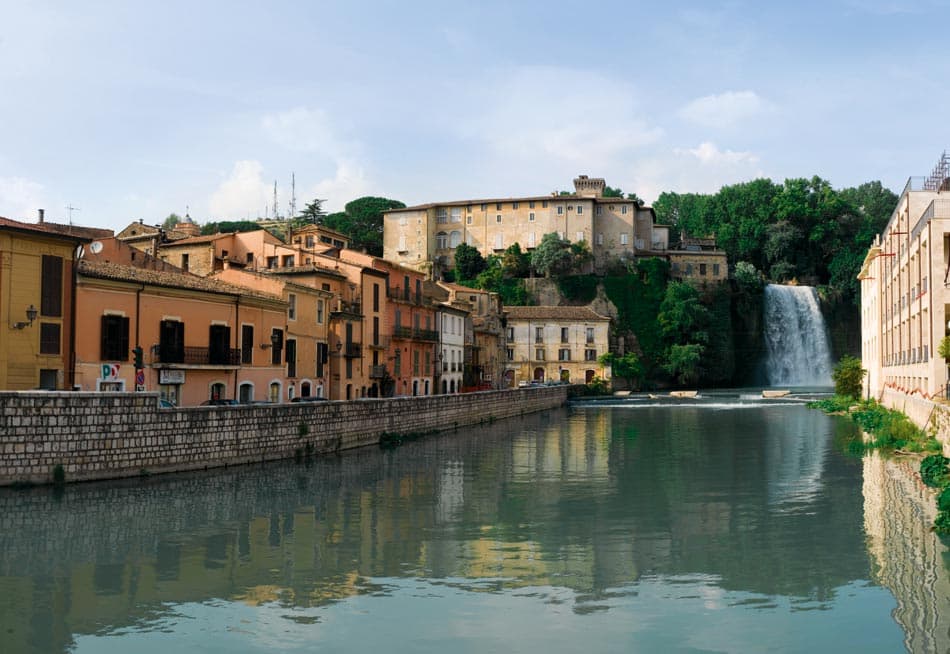
Overwhelmingly from the Mezzogiorno, the south: Campania, Sicily, Calabria, Abruzzo and Molise, Basilicata, Puglia, and the southern part of Lazio, which includes the hills and valleys of Ciociaria. Whole villages emptied in a decade. In some provinces the emigration rate in the peak years reached levels that changed the shape of the population for a century afterward, leaving towns of old people and children while the men worked in Pennsylvania or Ohio.
That is why an American with roots in Italy is far more likely to be looking for a small town in the south than for a city in the north, and why so many of those towns are in the regions our journeys are built in. Our guide to Ciociaria covers one of them.
The ports
Leaving, most took ship at Naples, which handled the bulk of the traffic from the south, or at Palermo, which handled Sicily, or at Genoa. Some traveled overland to Le Havre or Hamburg.
Arriving, New York took the great majority, through Castle Garden until 1890 and then through the Ellis Island station, which opened in 1892 and closed to mass immigration long before its final shutdown in 1954. Boston, Philadelphia and New Orleans took smaller but significant shares. New Orleans mattered more than people expect: it was the entry point for a large Sicilian migration into Louisiana's sugar country, and the Italian presence in the French Quarter is older than the one in most northern cities.
Your family's name was not changed at Ellis Island
This is the most common story in Italian American families, and it is not true. No names were written down at Ellis Island. Inspectors worked from the manifests that had been compiled at the port of departure and that crossed the ocean with the passengers, and the name on the manifest, on the inspection card and on the landing tag had to match. The National Park Service, which runs the site, calls the name change story a myth, and Smithsonian historians point out that if anything, officials corrected errors in the lists.
What did happen is that families changed their own names afterward, over years: to make a name pronounceable, to get work, to fit a neighborhood. Our guide to Italian surnames explains how the names were formed in the first place and what the changes usually looked like, which is the practical part when you are trying to match a name in a New Jersey census to a name in an Italian parish register.
How many went back
Between roughly 30 and 50 percent of those who arrived went home again within five years. This is the part of the story American families usually do not know, and it matters for research, because a man who crossed three times leaves three sets of records, and because a return often explains why the American branch and the Italian branch both exist.
Those returns also changed the towns. The two-story houses with a balcony that stand out in poor villages across the south were frequently built with American money, and the word americano is still used in some places to mean a certain kind of house.
1924: the door closes
The Immigration Act of 1924, known as the Johnson-Reed Act, set quotas at two percent of each nationality's population as counted in the 1890 census. Since Italians were barely present in the United States in 1890, the effect was to cut Italian immigration to a token number, which is what it was designed to do. The mass migration ended there. What followed after 1945 was smaller, and it was a different migration: skilled workers, war brides, family reunions.
Which American cities and states are most Italian
By numbers, New York State is first, followed by Pennsylvania, California, Florida, New Jersey and Massachusetts in recent American Community Survey estimates. By share of the population, Rhode Island and Connecticut lead. New York City has the largest Italian American population of any city.
The neighborhoods that kept their character are a short list, and the North End of Boston is on it. Our founder, who has lived in Boston, calls it one of the truest expressions of Italian identity outside Italy, and it is in her story.
The papers that survive, on both sides
In the United States: passenger manifests, naturalization papers, draft registration cards, censuses. Any one of them may name the town of origin, and the manifests after 1906 usually do.
In Italy: the civil registers kept by each comune since 1866, the parish registers that go back further, and the digitized records on the Antenati portal of the Ministry of Culture. Our guide to finding your family's town in Italy walks through the order to do it in, and our guide to visiting your ancestral town covers what to expect when you get there, including writing to the comune before you travel.
One warning: citizenship by descent is a separate matter with its own rules and its own professionals, and it is not something to sort out from a travel article.
Going to see it
A trip built on this history works best when the research is done first and the route is short: the town, the parish, the cemetery, the house if it still stands, and time to sit in the square rather than a schedule. That is the kind of trip we plan one at a time in Design your trip, and the history and memory days of our journeys are made of the same material.
Related articles
Roots & Memory
Italian Surnames: What They Mean and Where They Come From
Roots & Memory
Anzio and Nettuno: The Landing, and What Is There Now
Roots & Memory
The Gustav Line: The War Between Naples and Rome, on the Ground

Roots & Memory
WWII in Italy: The Places American Families Come Back To
Roots & Memory
How to Find Your Family's Town in Italy
Roots & Memory