
Roots & Memory
How to Find Your Family's Town in Italy
The name of the town is often already written on an American document. Where to look for it, how Italian registers work, and how to request a birth record from the comune.
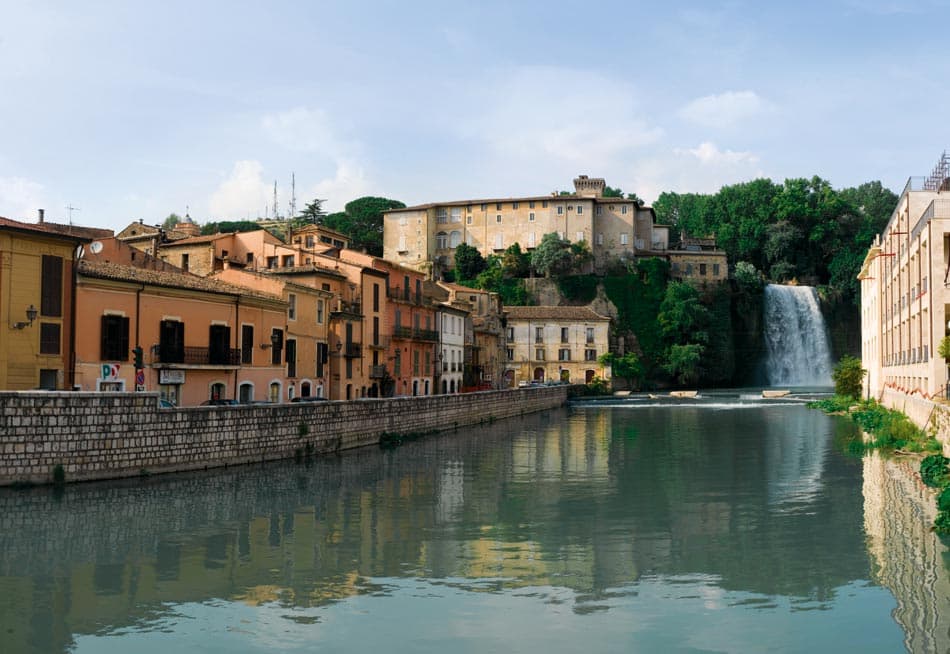
Start in the United States. The name of your family's town is often already written on an American document: a naturalization record, a ship's passenger list, a draft card. Once you have it, Italian genealogy research moves online, to the Antenati portal of the Italian Ministry of Culture and to FamilySearch, where the civil registers of many towns can be read for free.
The order matters. As FamilySearch puts it, in Italy most records are created locally, so the first job is to find where your ancestors lived.
Where Italian genealogy research starts: American records
Begin with what the family kept: passports, letters with an Italian postmark, prayer cards, the backs of old photographs. Then look for the records the government created.
Naturalization papers
If your ancestor became an American citizen after September 27, 1906, start here. From that date, standard federal forms asked every applicant for the date and place of birth and for the port and date of arrival. Earlier papers could be filed in any court, and they often give only a name, a country and a date. The National Archives holds the papers filed in federal courts, at the facility that serves each state. The Genealogy Program of U.S. Citizenship and Immigration Services holds duplicate files for naturalizations from 1906 to 1956.
Ship passenger lists
Passenger lists were drawn up in Europe, starting when the ticket was bought. From 1820 to 1891 they record the country of origin but not the town. Later lists add the last place of residence, from 1906 the place of birth, and from 1907 the name and address of the closest relative in the country of origin. The Statue of Liberty-Ellis Island Foundation's Arrival Records Collection covers New York and other ports and is free to search online.
Search the Italian form of each first name. The foundation notes that an immigrant the family knew as Joseph will likely be listed as Giuseppe. The surname may also differ from the one you know. Names were not changed by clerks at Ellis Island: according to USCIS, immigrants changed their names themselves, usually within five years of arriving.
Draft cards
About 24 million men registered for the World War I draft in 1917 and 1918. The cards of the first two registrations ask "Where were you born?" with separate spaces for town, state and nation, and the second also asks for the father's birthplace. The third, on September 12, 1918, asks for the date of birth but not the place, and for men who were not citizens it records only their nationality. On April 27, 1942, the fourth World War II registration, known as the "Old Man's Registration," covered men born between 1877 and 1897, then aged 45 to 64. Its cards also record the date and place of birth. The National Archives in St. Louis holds the World War II cards.
Check the town before you open a register
Many places in Italy share the same or similar names, and your ancestor may have lived in a village that belonged to a larger town nearby. Civil records are kept town by town, so confirm which comune the village belongs to and which province it lies in.
Names and borders have also moved. Cassino, in Ciociaria, the town where Italy Authentica's founder was born, was called San Germano until 1863. It belonged to the province of Terra di Lavoro until 1927, when the province of Frosinone was created. On the Antenati portal its oldest registers, from 1809, are filed under San Germano, "oggi Cassino" (today Cassino), and they are held by the State Archive of Caserta.
What is the best website for genealogy research in Italy?
Two free sites do most of the work.
The Antenati portal, created by the Directorate General for Archives of the Italian Ministry of Culture, publishes images of civil registers, conscription lists and military service records held by the Italian State Archives. It has an English version and costs nothing to use. To protect privacy, it shows birth registers only once they are at least 100 years old, and marriage and death registers after 70 years.
FamilySearch digitized many of those registers under an agreement signed with the Ministry in 2011, and many State Archive collections appear on both sites. FamilySearch is free, but since December 13, 2017, you need a free account to search its historical records.
Can I search for my Italian ancestry by name?
Only in part. The Antenati portal says it plainly: to search the civil registers you need the year and the place. Its name search covers only the registers that volunteers have indexed, and they are still a minority. If all you have is a surname, the portal suggests first finding the comuni where that surname is common, and only then searching their registers.
Once you know the town, a name and an approximate year are enough to start. Registrars compiled their own indexes, one for each year and one for each decade, and the portal publishes them alongside the registers. FamilySearch also has a name index, built by volunteers.
How Italian birth records are organized
Italy has kept civil registers for more than two centuries, though not everywhere from the same year. According to the Antenati portal, registration began in 1806 in the areas annexed to the French Empire. In the former Kingdom of the Two Sicilies, roughly today's southern Italy, it runs without a break from 1809, and in Sicily from 1820. It covers the Kingdom of Italy from 1866, and it starts later in the regions that joined the Kingdom after unification: 1870 in Rome and the Papal part of Lazio, 1871 in Veneto and Friuli (except the formerly Austrian area), 1918 in Trentino-Alto Adige. Cassino, which belonged to the Kingdom of the Two Sicilies, has registers from 1809.
A birth record gives the child's name, sex, date and place of birth and the parents' names. Later records add the parents' ages, occupations and birthplaces and the mother's maiden name. Marriage files can include supporting papers, called processetti or allegati, with proof of the bride's and groom's births.
Before civil registration, turn to the parish. The Church began keeping registers of baptisms, marriages and burials in 1563, after the Council of Trent, and most parishes have them from about 1595. Virtually all of them are still kept by the parish, with some duplicates in the archive of the diocese.
How can I obtain an Italian birth certificate?
Write to the civil registry office, the ufficio di stato civile, of the comune where the birth was registered. The Antenati portal is explicit: registry records are kept by the comuni, and certificates are requested from them. For addresses, it points to the website of ANCI, the national association of Italian municipalities.
If you found the record on Antenati and need an authenticated copy, ask the State Archive that holds the original register. Authenticated copies carry a stamp duty unless the use you declare is exempt. The images you download from the portal have no legal value.
Write in Italian and keep the request short, with full names, dates and the names of the parents. FamilySearch's Italy Letter Writing Guide offers sample sentences and a model letter, and warns that a reply can take six months or longer.
Italian citizenship by descent is a separate legal process, and its rules changed in 2025; for that, talk to a qualified professional.
Why is Italian DNA so unique?
Italy sits at a crossroads. A 2019 study published in Science Advances found that migration and mixing produced in Italy the largest degree of population structure, meaning genetic differences between regions, detected so far in Europe. Like other Europeans, Italians descend from a blend of early hunter-gatherers, Neolithic farmers and Bronze Age herders, and the study found in Italian genomes a further component that traces back to the Caucasus.
A consumer DNA test will not name your town. MedlinePlus, the health information site of the National Library of Medicine, explains that these tests predict where a person's ancestors most likely lived, that companies use different reference databases, that some populations are underrepresented and that tests generally do not account for historical migration. What a test can do is reveal relatives you did not know about, if they have tested too.
A practical order of work
- Write down what the family knows: full names, approximate dates, and the name of the town as it was said at home.
- Find the town on an American record: naturalization papers filed after 1906, a passenger list, a draft card.
- Confirm the comune and its province, then and now, and check for an older name.
- Search Antenati by town and year, starting from the annual and ten-year indexes, then try FamilySearch.
- Write to the comune or to the parish for what is not online.
- Before you book, read what to expect when you visit your ancestral town.
Once you have the town, a trip can be built around it. Italy Authentica designs tailor-made trips anywhere in Italy. On design your trip you tell us when you would like to travel, who is coming and what matters to you, and within seven days you receive a proposal with real names, places and costs. Maria Grazia Nardoianni, who founded Italy Authentica, was born in Cassino and reads every request herself. You can read her story on our site.
Related articles
Roots & Memory
WWII in Italy: The Places American Families Come Back To
Roots & Memory
Visiting Your Ancestral Town in Italy: What to Expect

Ciociaria & Lazio
Monte Cassino: How to Visit the Abbey and the Battlefield
Sicily
An Eastern Sicily Itinerary: 7 to 10 Days, Slowly

Planning
How to Plan a Trip to Italy: The Questions We Ask First

Food & Wine