Ciociaria & Lazio
Lazio Beyond Rome: Hill Towns Worth the Trip
Most visitors to Lazio sleep in Rome. The hill towns around it, from Tivoli to Anagni, are an hour or two away. Where to go, how to get there and where to stay.
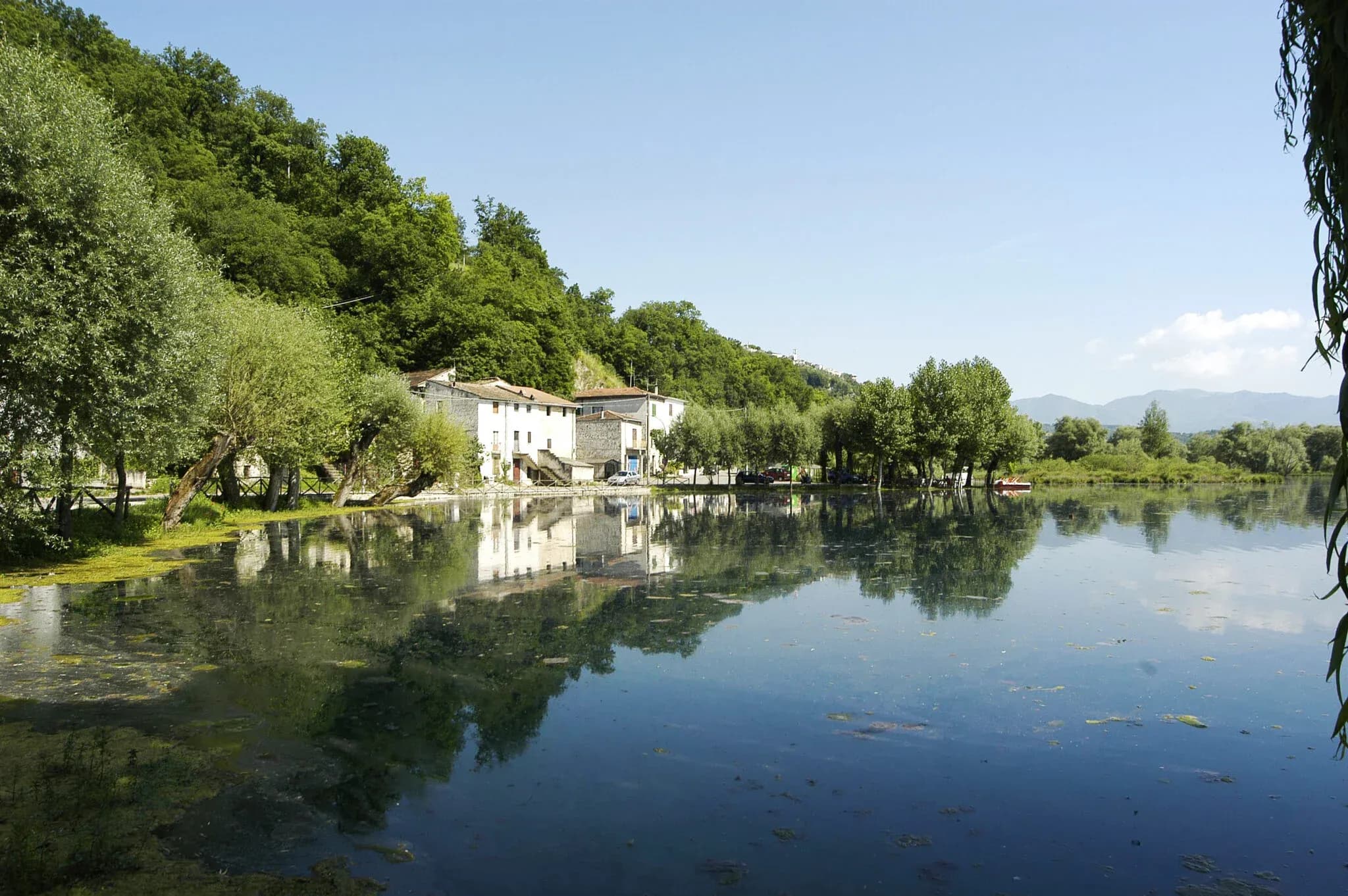
Lazio, Italy, is the region around Rome, and its hill towns are close enough for day trips from Rome or for a few slower nights. The Castelli Romani and Tivoli lie about 20 to 35 kilometers from the center of Rome, Anagni and Viterbo are one to two hours away by regional train, and Civita di Bagnoregio stands near the region's northern edge. Most visitors still sleep in the capital: of the 51.8 million overnight stays ISTAT recorded in Lazio in 2024, 42.7 million were in the city of Rome.
What is Lazio, Italy famous for?
Rome comes first. Outside the city, UNESCO lists Hadrian's Villa (1999) and Villa d'Este (2001) at Tivoli, and the Etruscan necropolises of Cerveteri and Tarquinia (2004). The region is also papal country well beyond the Vatican. Viterbo hosted a papal election that lasted 33 months, Anagni is linked to four medieval popes, and Castel Gandolfo has been the popes' summer residence since the early seventeenth century. Saint Benedict lived as a hermit at Subiaco before he founded Montecassino. And Lazio makes wine: Frascati in the hills southeast of Rome, and Cesanese del Piglio, which in 2008 became the region's first DOCG.
Rome is the capital of Italy and of Lazio, one of the country's 20 regions. Lazio is made up of four provinces (Frosinone, Latina, Rieti and Viterbo) and the Metropolitan City of Rome Capital. Our guide to Ciociaria explains how the names fit together in the south of the region.
What are the most beautiful towns near Rome?
No official list exists. The towns below are the ones we would choose, grouped by direction so that each group fits into a day trip from Rome, or better, two.
East: Tivoli and Subiaco
Regional trains from Roma Tiburtina reach Tivoli in 36 to 70 minutes, depending on the train (Trenitalia timetable for October 2026), and the town holds two World Heritage sites. Villa d'Este was built for Cardinal Ippolito II d'Este, governor of Tivoli from 1550, with gardens of fountains, grottoes and nymphaea designed by Pirro Ligorio. As of September 2026, its Organ Fountain plays every two hours from 10:30 in the morning. Hadrian's Villa, which the emperor built between AD 118 and 138, lies outside the town and needs its own half day. Local buses from Tivoli station stop at the entrance.
Subiaco, 73 kilometers from Rome in the Simbruini mountains, has no train station. At the end of the fifth century Saint Benedict lived as a hermit in a cave here, the Sacro Speco. The monastery later built around it is partly carved into the rock, and one of its chapels holds a portrait of Saint Francis, probably painted while he was still alive. Of the monasteries Benedict founded in the valley, only Santa Scolastica survives. In 1465 two printers, Konrad Sweynheym and Arnold Pannartz, set up the first movable-type press in Italy there.
Southeast: the Castelli Romani
The towns of the Castelli Romani are the closest to the city. Frascati has had a railway since 1856, one of the first lines in Italy, and direct trains from Termini still take about 30 minutes. Its wines include Frascati DOC and Cannellino di Frascati DOCG.
Castel Gandolfo sits on the edge of Lake Albano, a volcanic crater. Pope Francis turned its Apostolic Palace into a museum open to the public. Nemi looks down on another crater lake, where two giant ships of the emperor Caligula were raised between 1929 and 1931. The museum built for them in the 1930s lost both hulls to a fire in 1944, and it still shows materials from the ships. In Ariccia, Bernini designed the church of Santa Maria dell'Assunzione down to its furnishings, and scenes of Luchino Visconti's The Leopard (1963), with Burt Lancaster, were filmed in Palazzo Chigi. Ariccia's porchetta has carried PGI status since 2011.
North: Viterbo, Caprarola and Civita di Bagnoregio
Viterbo is 104 kilometers north of Rome, about an hour and 40 minutes by direct regional train from Roma San Pietro station. Its Palazzo dei Papi was built from 1257 to give the popes a safer seat than Rome. In its Sala del Conclave the cardinals took those 33 months to elect Gregory X, locked in cum clave, "with a key", and since then the word conclave has named the meeting that elects a pope. Leave time for the medieval quarter of San Pellegrino.
Caprarola, 63 kilometers from Rome, is built around Palazzo Farnese, which the architect Vignola turned from a fortress into a residence. Its spiral Scala Regia is frescoed from top to bottom, and the world map painted in the Sala del Mappamondo has no Australia.
Civita di Bagnoregio stands above a valley of eroded clay. An earthquake in 1695 destroyed the ridge that joined it to Bagnoregio, and today the only way in is a pedestrian bridge about 300 meters long, opened in 1965. As of September 2026 there is an admission fee, paid online or at the start of the bridge. Bagnoregio has no train station, so a car is the simplest way to get there.
Northwest: Tarquinia
Tarquinia is an hour and a quarter to an hour and 40 minutes from Termini on the direct regional trains, and its station is about 4 kilometers from the walled center by road. It was one of the most important Etruscan cities. In the Monterozzi necropolis, tombs painted between the sixth and the second century BC show athletes, hunters, fishermen, dancers and musicians, banquets and demons of the underworld. The national museum in the fifteenth-century Palazzo Vitelleschi keeps the terracotta Winged Horses.
Northeast: Greccio
Greccio sits 705 meters up, looking over the valley of Rieti, 97 kilometers from Rome. In 1223 Saint Francis had a manger with an ox and a donkey set up in a cave here for Christmas, and a priest celebrated Mass over it. Visit Lazio, the regional tourism board, calls it the first living nativity scene. The cave is now the Chapel of the Nativity inside the Franciscan sanctuary, and the town has re-enacted the scene every Christmas since 1972. The train trip requires a change at Terni, so a car is simpler.
South: Ciociaria
Anagni is 66 kilometers from Rome. Regional trains from Termini reach Anagni-Fiuggi station in about an hour, and the old town is about 9 kilometers from the station by road. Anagni is known as the City of the Popes. It is linked to four medieval popes, two of whom, Gregory IX and Boniface VIII, were born there, and the crypt of its cathedral is painted with thirteenth-century frescoes. Alatri, 93 kilometers from Rome, is still ringed by polygonal walls of fitted limestone, over 15 meters high in places. Our guide to Monte Cassino covers the abbey at the southern end of the same province.
What cities are closest to Rome?
Among the hill towns, the nearest are in the Castelli Romani: by road from the center of Rome, Frascati is about 22 kilometers, Castel Gandolfo 25, Ariccia 27 and Nemi 33. Tivoli, to the east, is about 33. Ostia, on the coast, belongs to the city of Rome itself, and our guide to beach towns near Rome follows the coast south from there.
Where to stay just outside of Rome?
It depends on how many towns you want to see and how much you want to move.
- For one or two excursions, stay in Rome and take the train. Frascati is about 30 minutes from Termini, and Tivoli about an hour from Tiburtina.
- For a slower week, choose one base per area: the Castelli Romani for the lakes of Albano and Nemi and easy trains back to Rome, Viterbo for Tuscia, a hill town in Ciociaria for Anagni, Alatri and Montecassino.
- If you drive, remember that many historic centers are ZTL, limited traffic zones where cameras record the plates of cars without a permit. The US Embassy in Italy warns that fines add up for each control point you pass and can reach your home address up to 360 days later.
Traveling slowly in southern Lazio
Our eight-day journey, Ciociaria, a Name That Sounds Like Earth, stays in the south of the region, for groups of up to eight, with days called Villages and Water, The Wild Landscape and The Memory of the Land. The Ciociaria destination page collects what we do there, and Villages and Slow Walks is the experience for travelers who want the old centers on foot.
Related articles
Ciociaria & Lazio
Monte Cassino: How to Visit the Abbey and the Battlefield
Ciociaria & Lazio
Ciociaria, Italy: The Region Between Rome and Naples
Ciociaria & Lazio
Beach Towns Near Rome: The Southern Lazio Coast
Sicily
An Eastern Sicily Itinerary: 7 to 10 Days, Slowly
Planning
How to Plan a Trip to Italy: The Questions We Ask First
Food & Wine