Ciociaria & Lazio · · 6 min read
Fiuggi: The Water, the Town, and What to Do There
The water is sold all over Italy. The town it comes from sits at 747 meters in the hills of southern Lazio, an hour and a half from Rome, and almost nobody writes about it.
Fiuggi water comes from two springs on the edge of a town of the same name, at 747 meters in the hills of southern Lazio, about 80 kilometers southeast of Rome. Americans usually meet the name on a bottle. Fewer know that the name belongs to a place: a medieval town on a ridge, a woods of chestnut and pine below it, and two parks built around the springs where people still come to drink the water by the glass, walk, and do very little.
Where does Fiuggi water come from?
From two springs about four kilometers below the old town, in a district that grew up around them and is called Fiuggi Fonte. The older one is named after Pope Boniface VIII, who was born at Anagni, twelve kilometers away, and who is said to have drunk this water. The second is the Anticolana spring, also called Fonte Nova, which sits in a much larger park.
The water rises through volcanic rock and comes out very low in dissolved minerals, which is what Italians call oligomineral. That is the whole of the chemistry an article like this should give you. What it does in the body is a medical question, and the answer belongs to a doctor, not to a travel guide.
Does Fiuggi water really work?
The claim is old enough to be quoted, and it is worth quoting precisely. On March 31, 1549, Michelangelo wrote to his nephew Lionardo that he had been drinking, morning and evening for about two months, water from a spring forty miles from Rome "which breaks the stone, and this has broken mine and made me pass part of it." He had kidney stones. The letter does not name the spring. Fiuggi is the traditional identification, and the distance from Rome fits, which is as far as the evidence goes.
Since then the water has been drunk for kidney stones, and the spa at the Boniface VIII spring runs a study center devoted to them. If that is why you are considering the trip, talk to your own doctor first and treat the visit as a pleasant place to follow their advice, not as a treatment you booked yourself.
For everyone else, the drinking is a social ritual more than a cure. People buy a glass, fill it at the spring, and walk the paths of the park in a slow loop, twice or three times, talking. It takes an hour. It is the most unhurried thing you can do in this part of Italy, and it costs the price of the ticket.
The two thermal parks
Boniface VIII is the smaller and the stranger of the two, and it is the reason an architecture student might come to Fiuggi. The complex was designed by Luigi Moretti, one of the significant Italian architects of the twentieth century, and built between 1963 and 1969 with the engineer Silvano Zorzi. Concrete is used here as a membrane rather than as a frame: a low rotunda over the spring, and beside it a trapezoidal pavilion whose canopy, ribbed with exposed beams, reaches out toward the trees. The Italian Ministry of Culture lists it in its atlas of contemporary architecture. In the warmer months the rotunda is used for concerts and exhibitions.
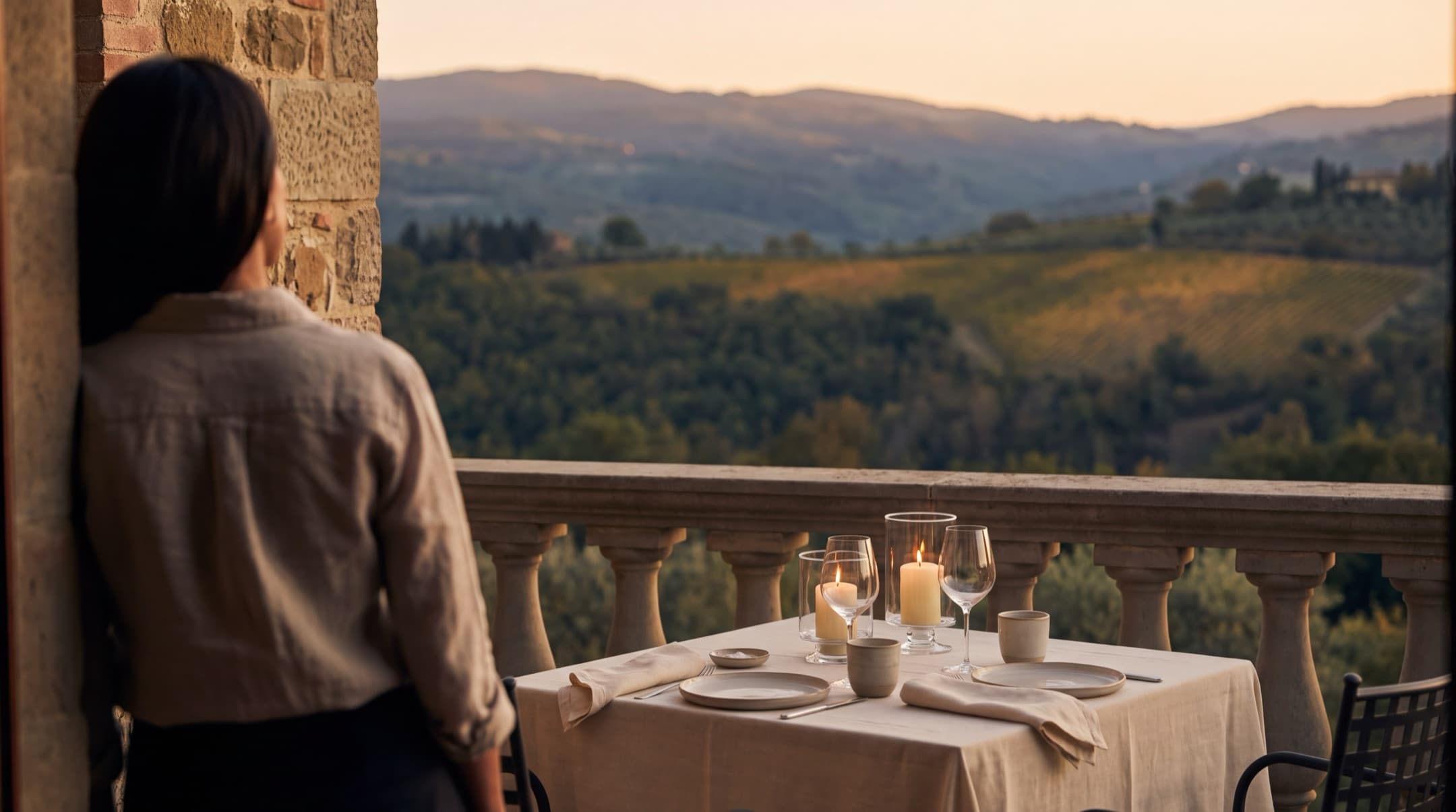
Anticolana, the other park, is the one for a long afternoon. It is wide and green, planted with sequoias and chestnuts, and crossed by footbridges and ponds. Around the drinking pavilions there are tennis courts, mini golf, a dance floor, walking paths and a little train for children. It is a public garden of the kind that Italian spa towns built when taking the waters was a season rather than an appointment, and it has aged into something calmer than it was designed to be.
When to go, and what is open
The Boniface VIII park opens for the season on April 1. The Anticolana park, being the summer one, opens later, at the end of May, and closes at the beginning of October, when the other switches to winter hours. In high season both are open roughly from 8 to noon and from 3:30 to 7:30 in the afternoon, with a long closure in the middle of the day that is not a mistake: nobody drinks the water under the August sun.
Those are the hours that were published for 2026, and they move a little every year, so check them before you travel. May, June and September are the months when the parks are full of green and empty of crowds. July and August bring Italian families on the classic two week cure, and the town fills up.
The town above the springs
Fiuggi was called Anticoli di Campagna until 1911, when it took the name of its water. The old town is a separate place from the spa district, higher up the hill, and it is worth the climb: dark stone lanes, arches, stairs, and a view that on a clear day runs across the whole valley toward the mountains of Abruzzo.
The town's own feast falls on February 2 and 3, for Saint Blaise, and it is called the Festa delle Stuzze. Enormous bonfires of logs carried down from the mountain are burned in the square of the old town. The tradition tells it this way: in 1298, when the place was still Anticoli and was held by the Colonna family, soldiers of the rival Caetani family came at night to attack it, saw the fires burning for Candlemas, took the town for one already in flames, and went away. The Caetani were the family of Boniface VIII, whose name is on the spring, which tells you how tangled the local history is. Our guide to Anagni, his birthplace, untangles some of it.
How to get to Fiuggi from Rome
By car it is about an hour and a quarter. The A1 motorway exit is called Anagni-Fiuggi, and from there the road climbs about fifteen kilometers through olive terraces.
Without a car, the regional bus company Cotral runs services from the Anagnina terminus of Metro line A in Rome to Fiuggi. The fast runs take around 75 minutes, the ones that stop everywhere closer to an hour and three quarters, and the timetable is thinner on Sundays. Check the current one before you go.
Fiuggi also works as a base for the hill towns around it, which are close together and badly served by public transport: Anagni is twelve kilometers away, Alatri about twenty. Our guide to Lazio beyond Rome puts them in order, and the one on Ciociaria explains what holds this region together.
Is it worth a day?
If you want monuments, no. Fiuggi has one real monument, and it is a concrete pavilion from 1969. If you want an afternoon that is not spent in a line, a park to walk in, a glass of water that has a letter from Michelangelo attached to it, and a medieval town above it with nobody in the streets, then yes, and half a day is enough. It pairs naturally with Anagni in the morning or with Alatri in the afternoon.
The slow part of a trip is the part that needs a reason to exist, and in this corner of Lazio the reason is usually water, shade and a walk. The relax and wellness day of our journeys is built on the same idea, and our journey in Ciociaria spends a whole day on it. If you would rather build your own version, tell us what you want from it in Design your trip.
Related articles
Ciociaria & Lazio
Two Women: Sophia Loren, and the Ciociaria the Film Came From
Ciociaria & Lazio
Subiaco: Where Benedictine Europe Started
Ciociaria & Lazio
Alatri and Arpino: Walls Nobody Can Date
Ciociaria & Lazio
Anagni: The Town That Slapped a Pope
Ciociaria & Lazio
Monte Cassino: How to Visit the Abbey and the Battlefield
Ciociaria & Lazio