Planning
Off the Beaten Path in Italy: What “Authentic” Means to Us
For us, authentic Italy is the Italy its people make for themselves. What the law protects, what the word means in practice, where the crowds are, and how we look for the rest.
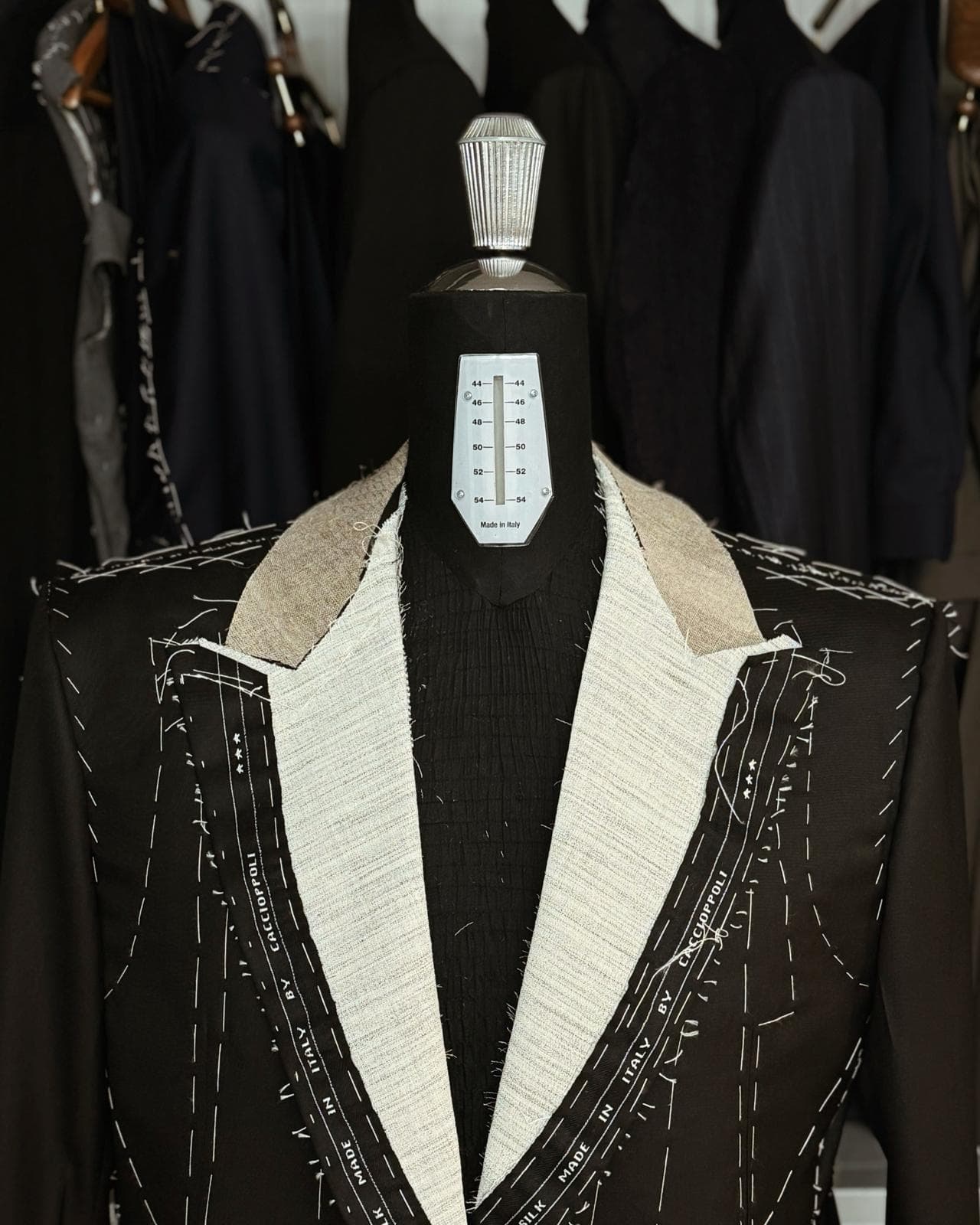
To us, authentic Italy is the Italy its people make for themselves: a cheese made the way it was a century ago, lunch among the vines with the people who grow them, a puppet-maker's workshop in Catania. Finding it off the beaten path in Italy takes less effort than the phrase suggests, because the crowds are concentrated. In 2024, fifty of Italy's nearly 7,900 municipalities held 42.3 percent of all the nights spent in Italian hotels and other lodgings.
What does authentic Italian mean?
For food, the nearest thing to a legal meaning is a protected name, and for everything else the word is looser. Under EU rules, a product with a protected designation of origin, DOP in Italian, must go through every stage of production, processing and preparation in its named area. For a protected geographical indication, IGP, one stage is enough.
The rules can be exact. Pecorino di Picinisco, a DOP cheese of Ciociaria, is made in the Comino Valley, in the province of Frosinone, from the raw whole milk of sheep fed mostly on fresh forage and pasture from the same area (up to a quarter of goat's milk is allowed), and it is curdled with rennet from nursing lambs or kids raised in the same area. An Etna Rosso must be at least 80 percent Nerello Mascalese, under rules for the Etna DOC first approved in 1968.
For everything else, we start from our founder. Maria Grazia Nardoianni was born in Cassino, in Ciociaria, and she counts Boston's North End among the most authentic expressions of Italian identity outside Italy. The word, for us, describes people who keep a way of making, cooking or celebrating, wherever they live.
Where to go in Italy that is not touristy?
Almost anywhere outside a short list. Istat, Italy's national statistics institute, counted 466.2 million nights spent in Italian lodgings in 2024. Rome alone had 42.7 million of them, 9.2 percent of the total and 12.3 percent of the nights spent by foreign visitors. Together, Rome, Venice, Milan and Florence held about a quarter of all foreign visitors' nights.
The concentration repeats inside the regions. Of the 51.8 million nights spent in Lazio in 2024, 42.7 million were in the city of Rome, more than eight in ten. In Sicily, Palermo is the only municipality among the fifty busiest in the country, and the whole island recorded 17.3 million nights, fewer than half of Rome's.
Timing matters too. In 2024, the four months from June to September held 54.9 percent of foreign visitors' nights in Italy, and the other eight months shared the rest.
What is an underrated part of Italy?
We would answer Ciociaria, the hill country of southern Lazio between Rome and Naples. It has no official borders: the Treccani encyclopedia describes it as roughly the province of Frosinone and takes the name from the ciocie, the footwear once worn by its peasants and shepherds. Its towns include Anagni, Ferentino, Alatri, Veroli and Sora.
In Alatri, blocks of local stone fitted without mortar form walls more than two thousand years old around the town and its acropolis, and the lintel over the largest gate is a single stone more than five meters long. At the southern end of the province, Saint Benedict founded the abbey of Montecassino around 529. Allied bombing almost entirely destroyed it on February 15, 1944, and Pope Paul VI consecrated the rebuilt abbey in 1964. Lake Posta Fibreno, a regional nature reserve since 1983, is fed by spring water that stays at about 50°F all year. Our guide to Ciociaria goes further, and our Ciociaria destination page introduces the region and our journey there.
In eastern Sicily we would add Catania, home with Palermo to one of the two main schools of the Opera dei Pupi, the Sicilian puppet theater that emerged at the beginning of the nineteenth century with stories of medieval knights, saints and bandits. UNESCO proclaimed it a masterpiece of intangible heritage in 2001 and inscribed it on its Representative List in 2008. Our guide to Catania's fish market and street food covers the city's markets.
What is something you can only buy in Italy?
In a legal sense, nothing on the DOP register: the rules fix where and how a product is made, and say nothing about where it may be sold. What stays in Italy is the product at its source and in its season. The cannellino beans of Atina, a DOP of six municipalities in the province of Frosinone, are harvested between September 10 and October 30. The green pistachios of Bronte, on the western slopes of Etna, and of Adrano and Biancavilla, grown mainly on lava soils, are picked by hand every other year, generally between August 20 and October 10.
Is $1,000 enough for a week in Italy?
Not at average spending. The Bank of Italy's survey of international tourism, published in June 2026, found that travelers from the United States spent an average of €178.10 per person per night in Italy in 2025, flights to and from Italy excluded. A week at that rate comes to about €1,250, roughly $1,430 at the European Central Bank reference rate of September 21, 2026 ($1.149 to the euro). Our guide on how to plan a trip to Italy works through larger budgets, including $5,000 and $10,000.
When to go and how to get there
Spring and fall suit both regions. For 1991 to 2020, average highs were 75°F in May and 71°F in October in Frosinone, and 74°F and 75°F in Messina, the weather station closest to Taormina. Most of our 2027 group departures fall in those seasons: Ciociaria in May, July and September, eastern Sicily in April, June, September and October. A week in one region leaves time for a slow pace.
On the October 2026 timetable, direct trains from Rome Termini reach Frosinone in about an hour to an hour and a half, and direct trains from Catania airport reach Taormina-Giardini station in about 50 minutes to an hour and 20 minutes. Inside Ciociaria, towns such as Alatri and Atina have no train station, so a car or a driver makes the difference. On our group journeys, the transfers are organized.
How we look for authentic Italy
Our group journeys last eight days, take up to eight guests and are always accompanied. They run in Ciociaria, where Maria Grazia was born, and in eastern Sicily, from a base in Taormina, which she calls "the Sicily that adopted me." She left home at fifteen and lived in Boston, Bologna, Rome, Milan and Madrid, promoting products from Italy's lesser-known regions in Europe and the United Arab Emirates.
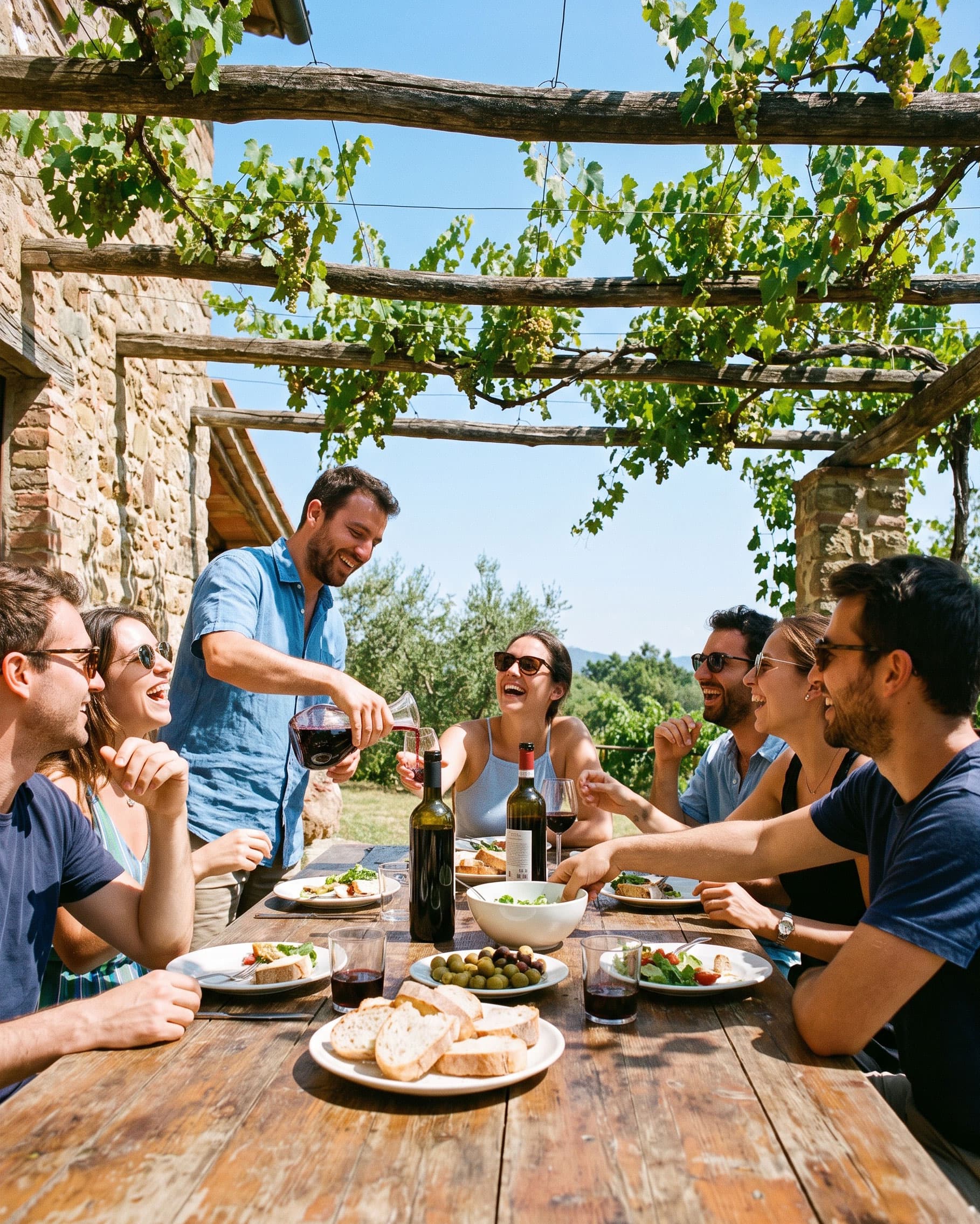
The days are built around people at work: a cheesemaker in Ciociaria whose cheese is made the way it was a century ago, lunch among the vines with the people who grow them, an organic farm in the Hyblaean hills, the fish market and a puppet-maker's workshop in Catania.
For a trip of your own, Maria Grazia reads every request that comes through design your trip, and within seven days you receive a proposal with the real names of the places, houses, tables and experiences, and the costs. Her story is on our story page, and the group journeys are on the journeys page.
Related articles
Planning
How to Plan a Trip to Italy: The Questions We Ask First
Planning
How to Choose a Small Group Tour of Italy
Planning
Italy in the Fall: Where to Go From September to November
Planning
Italy for Travelers Over 60: Planning a Trip That Fits
Planning
A Southern Italy Itinerary for a First Trip
Planning