Sicily
Is Sicily Safe? An Honest Answer for American Travelers
Yes, with the care you would take in any popular European destination. The current U.S. advisory, what the crime data shows, and the practical things to watch for in eastern Sicily.
Yes. Sicily is safe for American travelers who take the ordinary precautions of any popular European destination. As of September 22, 2026, the U.S. Department of State rates Italy at Level 2, "Exercise increased caution," the same level as France, Germany, Spain and the United Kingdom, and its advisory does not single out Sicily. The risks a visitor is most likely to meet are practical ones: pickpockets in crowds, unlicensed drivers at the airport, traffic fines that arrive months later, and a volcano with rules of its own.
Is Sicily safe for U.S. citizens?
There is no separate Sicily travel advisory. The State Department issues one advisory for Italy as a whole, and the current one, updated in September 2026, keeps the country at Level 2 because of the risk of terrorism, as it has been since at least May 2025. Several other European countries are at Level 1, including Greece, Portugal, Croatia, Austria and Switzerland.
The same advisory is direct about everyday crime: petty crime is common, especially in popular tourist locations and on public transportation, including trains. Most crimes against foreigners, it says, are crimes of opportunity, such as purse snatching, pickpocketing and car break-ins. Its recommendations are the standard ones: enroll in the Smart Traveler Enrollment Program (STEP) so the embassy can reach you, stay alert in tourist spots, follow local news, and buy travel insurance that covers medical care and evacuation. You can read the full text on the State Department's advisory for Italy.
What the crime numbers show
Every year the Italian business daily Il Sole 24 Ore publishes a crime index that ranks the country's 106 provinces by crimes reported to the police per 100,000 residents, using Interior Ministry data. In the 2025 edition, based on 2024, the top three places went to Milan, Florence and Rome. The province of Catania ranks 23rd, Siracusa 27th, and Messina, the province that includes Taormina, 92nd.
These figures count reports, not the risk to a visitor, and the newspaper itself notes that big cities score higher partly because tourists, commuters and students swell the number of people present without being counted as residents. Read that way, the data does not support the idea that eastern Sicily is more dangerous than Milan, Florence or Rome.
Is Catania safe? And Taormina?
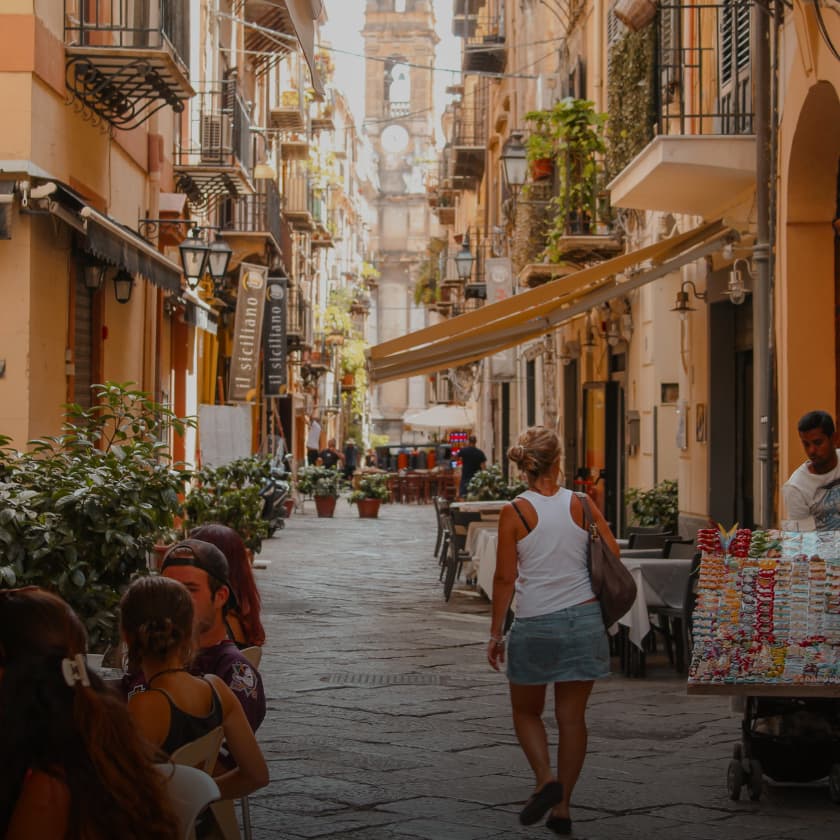
Catania is Sicily's second-largest city, and it asks for big-city habits: a closed bag in the market streets and on buses, a licensed taxi at night. Its province records fewer reported crimes per resident than Milan, Florence, Rome, Bologna, Turin or Naples. Taormina, a town of about 10,000 residents, belongs to the province of Messina, which sits in the bottom fifth of the same ranking, among the provinces with the fewest reported crimes per resident. In both places, the warning that applies is the advisory's general one about crimes of opportunity.
What should I be careful of in Sicily?
- Bags and phones in crowds. Popular tourist spots and public transportation, trains included, are where the advisory places petty crime. Carry a bag that closes, keep it in front of you, and keep the phone out of your back pocket.
- Anything visible in a parked car. Car break-ins are on the State Department's list. Leave the car empty, or park where you can see it.
- Taxis at Catania airport. Licensed taxis wait at the exit of the Arrivals level. They are white, with a TAXI sign on the roof and the license number on the doors, the back and inside. The airport warns that other drivers at the exit may be unlicensed and ask a different fare, and suggests asking the staff about fares before getting in. Our guide from Catania airport to Taormina covers every other option.
- Limited traffic zones. Many Italian historic centers restrict cars with camera-controlled zones, called ZTL. Nobody stops you: the fine reaches your home address, often through the rental company, within 360 days, and each pass through a camera is a separate fine. The U.S. Embassy also advises Americans who plan to drive to get an International Driving Permit before leaving home.
- Tickets. Paper tickets for regional trains must be validated in the machines at the station before boarding, while electronic tickets bought online or in the app do not need it. Bus tickets are bought in advance and validated once aboard. Inspectors fine on the spot.
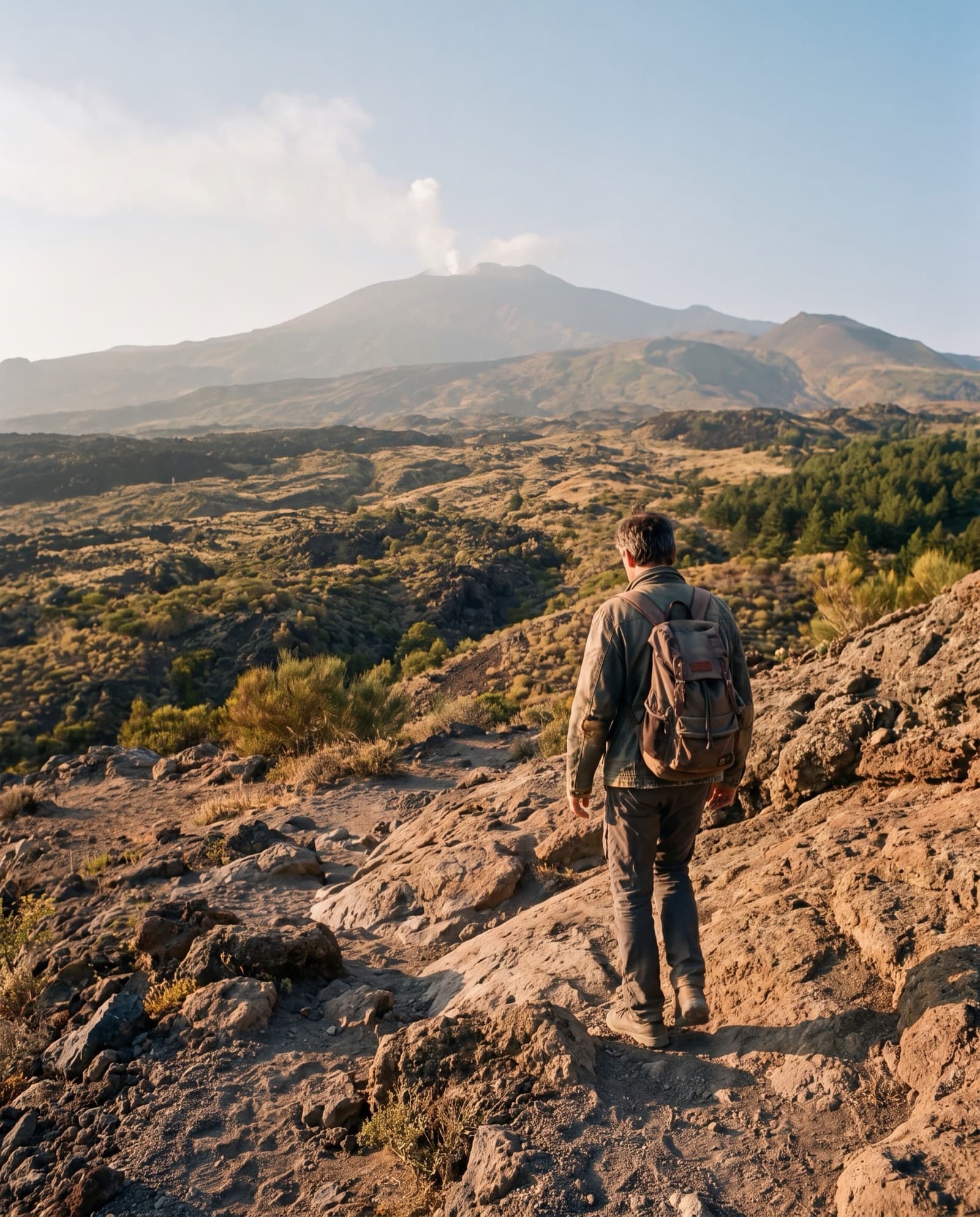
- Etna. The towns around the volcano issue ordinances that set how high visitors may hike on their own and where an authorized guide is required, and they change with the volcano's activity. Several were issued in July and August 2026. Our guide to visiting Mount Etna explains the rules.
- Summer heat. From May to September, Italy's Ministry of Health publishes heat-wave forecasts for 27 cities, Catania, Messina and Palermo among them. On the hottest days, plan the walking for the morning.
Is it safe for Americans to travel to Sicily right now?
Yes. One thing to plan for in 2026 is Etna. In August, ash from the volcano, about 30 kilometers (20 miles) north of Catania, suspended flights at Catania airport more than once. Over one week, more than a third of the airport's 1,974 scheduled flights were canceled and another 600 were diverted, the largest disruption there in more than two decades, according to Reuters and Associated Press reporting. Volcanic eruptions tend to count as extraordinary circumstances, so airlines are not legally obliged to pay compensation. On the mountain itself, Italy's National Institute of Geophysics and Volcanology (INGV) monitors the volcano, and access to the summit areas is managed through the ordinances described above.
The practical answers are travel insurance that covers trip cancellation, a buffer day before any flight home, and a look at the airport's flight status on travel days.
Where not to stay in Sicily?
There is no official list of places to avoid, and the U.S. advisory names none in Sicily. The useful questions are practical. Stay close to what you came to see, within walking distance of the historic center in Catania, Siracusa or Taormina. If you are not driving, check how far the room is from the station or the bus stop. In hill towns, ask how many steps separate the door from the nearest place a car can stop, especially with luggage. And if you are driving, ask your hotel before you arrive how to reach it without crossing a restricted zone, and where to park.
If something goes wrong
In the provinces of Catania, Siracusa, Ragusa and Messina, calls to 112, and to the other emergency numbers 113, 115 and 118, reach a single answering center in Catania that locates the caller and routes the call to police, fire or ambulance.
For Americans, Sicily falls under the U.S. Consulate General in Naples, which oversees a Consular Agency in Palermo. The Palermo office helps U.S. citizens in emergencies, from hospitalization to arrest to being the victim of a crime, and has a 24-hour emergency line. It cannot issue a same-day emergency passport: for that you have to go in person to the consulates in Naples, Rome, Florence or Milan. Americans who need help can also call the State Department around the clock, at +1-202-501-4444 from abroad. Keep a copy of your passport separate from the original, and store these numbers in your phone before you leave.
Traveling in Sicily with Italy Authentica
On our group journeys in Sicily, the pick-up from Catania or the airport is included, and the groups, up to eight guests, are always accompanied, with support from the first day to the last. If you would rather travel on your own dates, design your trip and tell us how you like to travel: within seven days you receive a proposal with real names, from the places to the costs.
Related articles
Sicily
An Eastern Sicily Itinerary: 7 to 10 Days, Slowly
Sicily
Sicily in October and November: What It Is Really Like
.webp&w=3840&q=75)
Sicily
Things to Do in Taormina, Slowly
Sicily
Visiting Mount Etna Without the Crowds
Sicily
Ortigia, Noto and Modica: Sicily's Baroque Southeast
Sicily